
Designing Homes for Aging in Place: Ensuring Safety and Comfort
- Cody Orndoff
- Mar 3, 2025
- 2 min read

Designing Homes for Aging in Place: Ensuring Safety and Comfort
As individuals age, the desire to maintain independence and remain in familiar surroundings becomes increasingly important. Designing a home that accommodates changing needs—commonly known as "aging in place"—involves thoughtful modifications to enhance safety, accessibility, and comfort. This guide explores key design elements, highlights products to facilitate aging in place, and features insights from experts in the field.

Key Design Elements for Aging in Place
Accessible Entryways
Implementation: Ensure at least one entrance is step-free, with a low threshold and a door width of at least 36 inches to accommodate mobility aids.
Benefits: Facilitates easy and safe access for individuals using wheelchairs or walkers.
Slip-Resistant Flooring
Implementation: Install non-slip flooring materials such as textured tiles, low-pile carpeting, or cork in areas prone to moisture, like bathrooms and kitchens.
Benefits: Reduces the risk of falls, a leading cause of injury among older adults.
Lever-Style Door Handles and Faucets
Implementation: Replace traditional knobs with lever-style handles, which are easier to operate for individuals with arthritis or limited hand strength.
Benefits: Enhances ease of use and reduces strain on joints.

Adequate Lighting
Implementation: Incorporate layered lighting solutions, including ambient, task, and accent lighting, to eliminate shadows and improve visibility.
Benefits: Improves safety and reduces eye strain.
Bathroom Modifications
Implementation: Install grab bars in showers and near toilets, opt for walk-in tubs or curbless showers, and consider elevated toilet seats.
Benefits: Enhances safety and accessibility in a high-risk area for slips and falls.
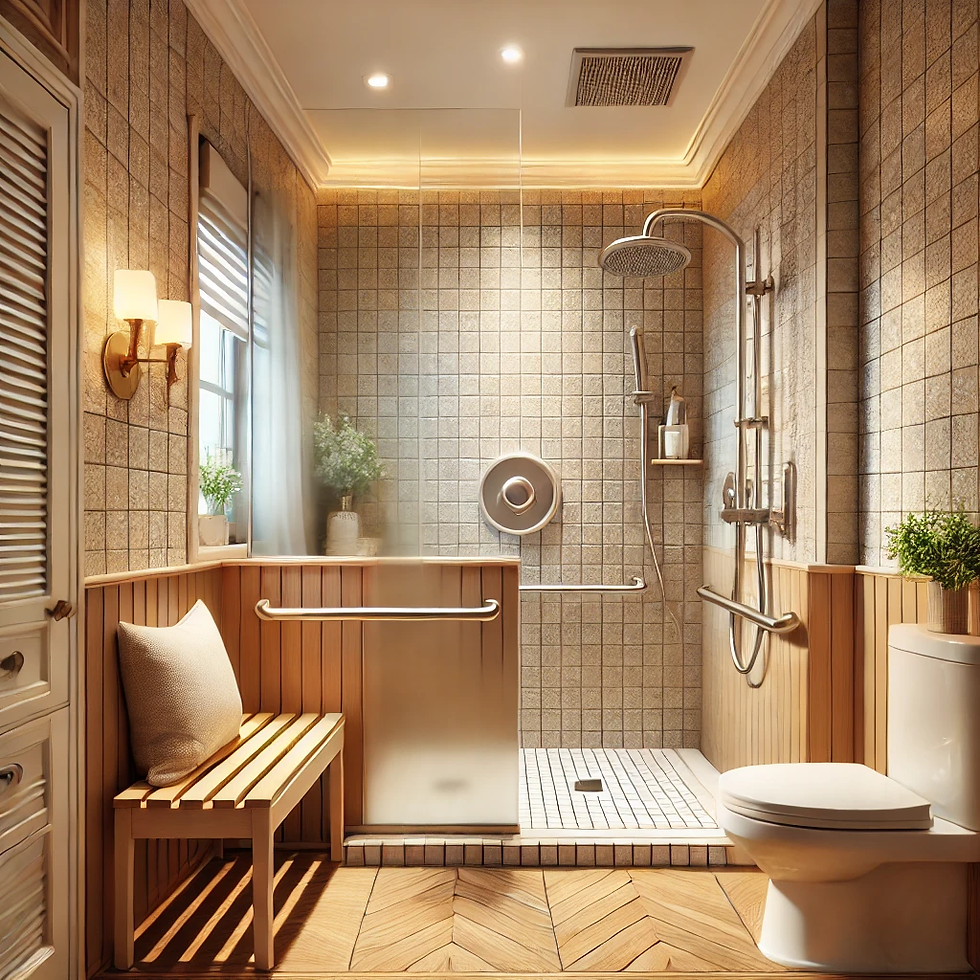
Bathrooms with mobility in mind should have amble clearance, low curb for easy stepping, and hand rails in place for safely getting around in the bathroom.
Recommended Products for Aging in Place
Michael Graves Design Accessible Bedroom Furniture: This collection combines elegance with functionality, featuring beds and nightstands with built-in armrests and grab rails to assist with mobility. citeturn0news26
Smart Home Automation Systems: Voice-activated assistants and automated lighting can provide convenience and reduce physical strain.
Adjustable-Height Countertops: These allow users to modify the height of kitchen and bathroom surfaces, accommodating both standing and seated positions.
Insights from Aging in Place Experts
Bonnie J. Lewis: As a Certified Aging-in-Place Specialist and interior designer, Lewis emphasizes the importance of integrating safety features seamlessly into luxurious designs. Her approach ensures that homes are both beautiful and functional for aging residents. https://iconiclife.com/aging-in-place-well-aging-design-bonnie-lewis/?utm_
Arlene Bobb: An interior designer and certified aging-in-place professional, Bobb shares practical advice on designing spaces that prioritize safety without compromising aesthetics. Her own residence showcases thoughtful modifications tailored for aging in place. https://mainlinetoday.com/life-style/age-in-place-arlene-bobb/?utm_
Conclusion
Designing a home for aging in place requires a balance between functionality and style. By incorporating accessible design elements and utilizing products tailored for older adults, it's possible to create a safe, comfortable, and aesthetically pleasing environment that supports independence and enhances quality of life.



Comments